Picture this: you wake up to sunshine, grab a quick espresso, and step out for a peaceful walk past palm-lined streets before browsing boutiques on Rodeo Drive. If you want convenience, security, and a polished lifestyle without the upkeep of a yard, a Beverly Hills condo can fit your rhythm. In this guide, you’ll learn what daily life really looks like, the kinds of buildings and floor plans you’ll find, how HOAs work, and what to ask before you buy. Let’s dive in.
What daily life feels like
A typical day in a Beverly Hills condo is defined by proximity and ease. Many buildings sit near the Golden Triangle and Santa Monica Boulevard, so coffee, dining, and shopping are close. You can stroll Beverly Gardens Park for fresh air or step into The Wallis for evening performances. If your building offers concierge and valet, errands and guest arrivals feel seamless.
You will likely rely on secured parking and ride-hail for longer trips. Street parking can be tight near commercial areas, so buildings with valet or assigned spaces reduce stress. For groceries and services, some buildings place you within a short walk, while others are a quick drive to West Hollywood, Century City, or Westwood.
Beverly Hills condo buildings
Boutique low-rise
You will find 2 to 4 story communities with classic or mid-century character and smaller HOAs. These often feel intimate and residential. They may offer lower-key amenities while still delivering a central location.
Mid-rise luxury
Mid-rise buildings usually range from 4 to 12 stories and emphasize service. Expect concierge or 24-hour doorman, structured parking, and curated amenities. These are popular for buyers who value security and staff support.
Townhouse-style condos
Some properties offer multi-level layouts with more private entries. You get condo governance with a townhome feel. This can appeal if you want separation between living and sleeping areas.
Modern luxury developments
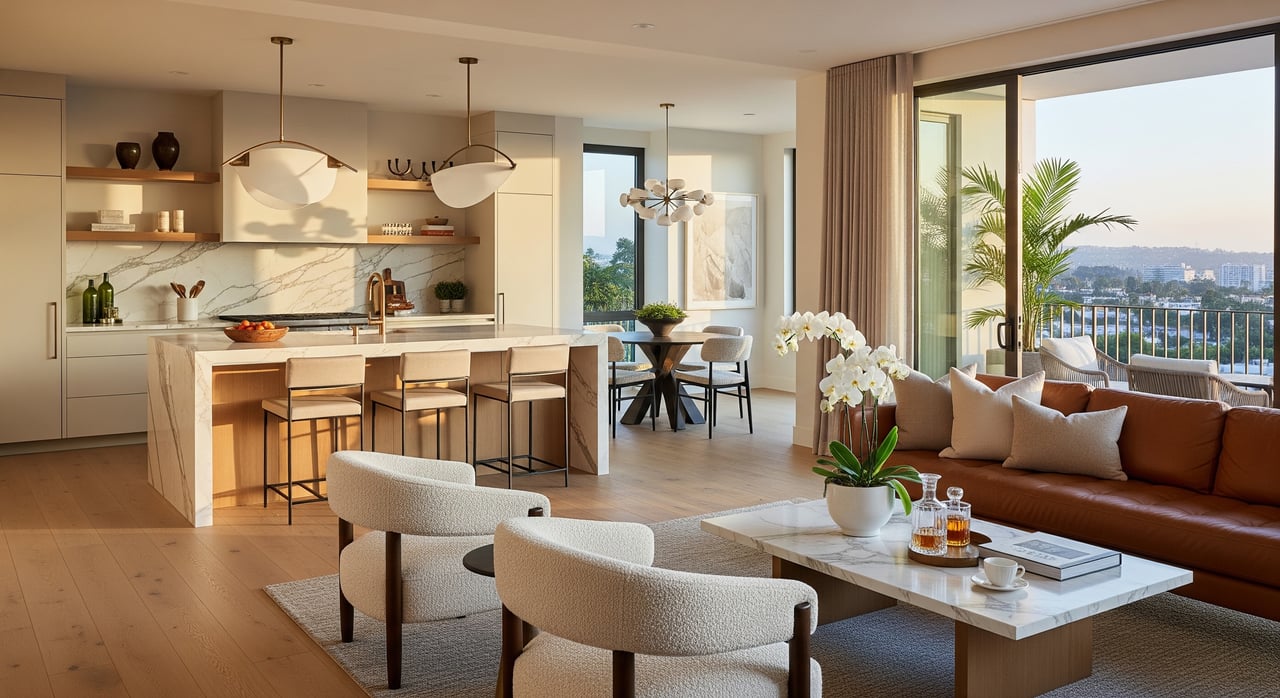
While true high-rise towers are less common than downtown, you will find newer, full-service buildings near key corridors. These prioritize high-end finishes and larger amenity spaces. Penthouses may include private terraces and premium views.
Floor plans and space
- Studios: efficient city living, commonly under 600 square feet.
- One-bedrooms: often 600 to 1,000+ square feet, good for singles or couples.
- Two-bedrooms: around 900 to 1,800+ square feet.
- Three-bedrooms and penthouses: larger footprints, often with terraces and higher ceilings.
In Beverly Hills, luxury two-bedrooms and larger units often run bigger than similar layouts in other nearby neighborhoods. You’ll also see higher-end finishes and thoughtful storage. If outdoor space matters, focus on homes with terraces or balconies.
Amenities that shape your routine
Luxury buildings often deliver the lifestyle many buyers want. Common features include:
- Concierge, doorman, and valet parking for secure, easy arrivals.
- Secured underground parking with assigned spaces.
- Fitness centers, pools, spas or saunas, and rooftop terraces.
- Package rooms, on-site management, and maintenance staff.
- Storage lockers and bike storage for extra gear.
- Partnerships for housekeeping, in-building dry cleaning delivery, and even private event rooms or screening rooms in higher-end buildings.
These services create a true lock-and-leave setup. If you travel often, staff can help manage packages, vendors, and guest access.
HOA dues and how they work
In Beverly Hills, HOA dues are often higher than in suburban communities because they fund staffing, services, and reserves. You should confirm what dues cover, such as water, gas, pooled utilities, cable or internet, and janitorial services. Healthy reserves and transparent budgets matter for long-term costs.
Review the documents closely: CC&Rs, bylaws, recent meeting minutes, budgets, reserve studies, and master insurance. Ask about any pending or recent special assessments. Strong governance protects the building and your investment over time.
Walkability and getting around
Many central condos offer excellent walkability to luxury retail, cafes, and cultural venues. If you value a quiet setting, there are residential pockets that trade a lively streetscape for more privacy. Consider your daily habits and whether a few blocks’ difference changes your routine.
Car ownership is still common. Buildings with valet or structured parking make coming and going simpler. Public transit exists across greater Los Angeles, though many residents find driving or ride-hail faster for daily errands.
Daily destinations near home
Rodeo Drive and nearby corridors provide shopping, galleries, and specialty dining at your fingertips. Beverly Gardens Park and Will Rogers Memorial Park make daily walks and dog time easy. The Wallis Annenberg Center for the Performing Arts offers a steady calendar of events.
Depending on your building, you may walk to a market or take a short drive for a full grocery run. West Hollywood, Century City, and Westwood expand your choices for dining and entertainment. A central address makes meeting friends or clients straightforward.
Condo vs single-family homes
Advantages
- Convenience near retail, dining, and cultural venues.
- Security with controlled access, doorman, and concierge.
- Less maintenance since exterior upkeep is handled by the HOA.
- Simple lock-and-leave living for frequent travelers.
- Access to amenities like pools, gyms, or event spaces that many single homes lack.
Consider the compromises
- Less private outdoor space compared to a yard.
- Shared walls and potential for noise depending on construction.
- HOA rules that limit certain changes, rentals, or pet options.
- Parking limits for guests and a set number of assigned spaces.
- Ongoing HOA dues and possible special assessments.
- Building-level decisions that may affect costs or timing for upgrades.
Due diligence checklist
Before you write an offer, request and review:
- CC&Rs, bylaws, and rules and regulations.
- Latest HOA budget, financial statements, and reserve study for the last 2 to 3 years.
- Minutes from HOA meetings for the last 12 to 24 months.
- Master insurance policy and deductible details.
- Any pending or recent special assessments or litigation.
- Condo map or plat for parking and storage assignments.
- Building inspection reports, capital improvement records, and permit history with the city.
- Seller disclosures plus recent pest, termite, and home inspections.
- Rental policy and owner-occupancy percentages.
Questions to ask the HOA or listing agent
- What are the typical monthly HOA fees and what do they include?
- Are utilities included or separate?
- How many parking spaces come with the unit, and what are the guest parking rules?
- What is the building’s earthquake and seismic status, and are any retrofits planned?
- Are there active or upcoming special assessments, and how are reserves funded?
- What are the pet policies and any size or number restrictions?
- What is the owner-occupancy ratio, and how does it affect lending and insurance?
- Are short-term rentals allowed, and under what rules?
- What recent capital projects were completed, and what is deferred?
Practical lifestyle checks during showings
- Visit at different times to gauge hallway, elevator, and street noise.
- Test elevator wait times and reliability in larger buildings.
- Confirm cell and internet coverage in the unit and common areas.
- Time your drive during peak hours to check ingress and egress flow.
- Verify parking space size and clearance for larger vehicles.
Tips for choosing the right building
- Define priorities: walkability, quiet streets, or full-service amenities.
- Focus on floor plan fit: storage, work-from-home needs, outdoor space.
- Confirm parking and guest options that match your lifestyle.
- Review pet policies to ensure they align with your needs.
- Evaluate HOA financials and the reserve study for long-term health.
- Ask about seismic upgrades and upcoming capital projects.
- Consider owner-occupancy levels if you plan to finance or rent later.
Work with a local advisor
Buying a Beverly Hills condo is as much about lifestyle as it is about the unit. The right agent helps you weigh service levels, HOA health, and micro-location so your daily routine is easy and enjoyable. If you want boutique service backed by deep neighborhood knowledge, connect with Danny Hizami to explore available condos and compare buildings that fit your goals.
FAQs
What does daily life in a Beverly Hills condo look like?
- Expect easy access to retail and dining, helpful building staff for deliveries and guests, and quick trips to parks and cultural venues.
How do Beverly Hills HOA fees typically work?
- Dues often fund concierge-level services, staffing, maintenance, and reserves, so confirm what utilities and services are included before you buy.
What amenities are common in luxury Beverly Hills condos?
- Many include doorman or concierge, valet, secured parking, fitness centers, pools, spas, rooftop spaces, package rooms, and storage.
How does walkability vary by Beverly Hills location?
- Central buildings near commercial corridors are highly walkable, while quieter residential pockets may require short drives for errands.
What should I review before making an offer on a condo?
- Request CC&Rs, bylaws, financials, reserve study, meeting minutes, insurance, assessments, inspection reports, and parking assignments.
How do condo trade-offs compare with single-family homes in Beverly Hills?
- You gain convenience, security, and amenities, while giving up private yard space and accepting HOA rules, dues, and shared walls.